Our class has already discussed several themes in Contemporary Art, including identity and the body. For this weeks reading of Themes of Contemporary Art: Visual Art after 1980, we learned about the various ways in which contemporary artists deal with time.
For my portion of the reading I looked closely at the section Reframing the Present. Here are a few of the artists discussed:
Kara Walker
Best known for her gallery-sized tableaux of black cut silhouettes on a white background wall, which examine the undertones of American racial and gender tensions. Originally born in Stockton, California, Walker moved to a suburb of Atlanta at age 13. Her work is layered with references from literature, historical events, and culture. Walker strives to make viewers think about the way in which history is represented affects race dynamics today.


One of India's most sought after contemporary artists, Dodiya incorporates a mix of both Western art, and the history and culture of India. He has created paintings on the corrugated metal exteriors of roll up doors that have been removed from actual shops in India. The paintings on the exteriors celebrate India's history, depicting figures such as Gandhi. The doors then raise to expose surreal paintings of events.
Art critic John Brunetti remarked:
"These hidden images are stark portrayals of an India very different from that presented by Gandhi's non violent resistance." (134)
Dodiya, much like Walker, expresses how celebratory versions of history cease to acknowledge the issues that exists presently.


+Atul+Dodiya-1.jpg)
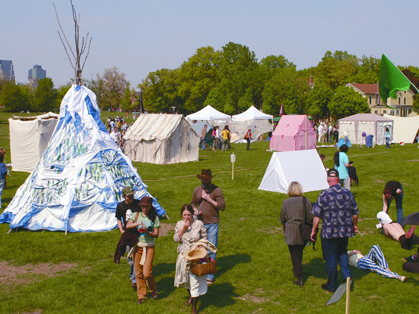
Smith examines historical reenactments, with works such as The Munster (2005). This piece was a public art project which mixed the aesthetics of Civil War reenactment with contemporary artistic expression. She invited fifty individuals and collaborative groups to build campsites at Fort Jay on Governor's Island in New York City, making costumes, banners, flags and installations intended to celebrate anything anyone was fighting for.

Artists also, deal with revisiting their own personal histories, as discussed in the passage. Artist Tracey Emin's installation, Everyone I Have Ever slept With 1963-1995 (1995), is a tent embroidered with the names of all the people Emin had ever shared a bed with over the past three or so decades.


No comments:
Post a Comment